2024
Information Design
Dataviz on Women's Participation in Labour Force
Change in participation of women in India and comparable countries
Self-inititated
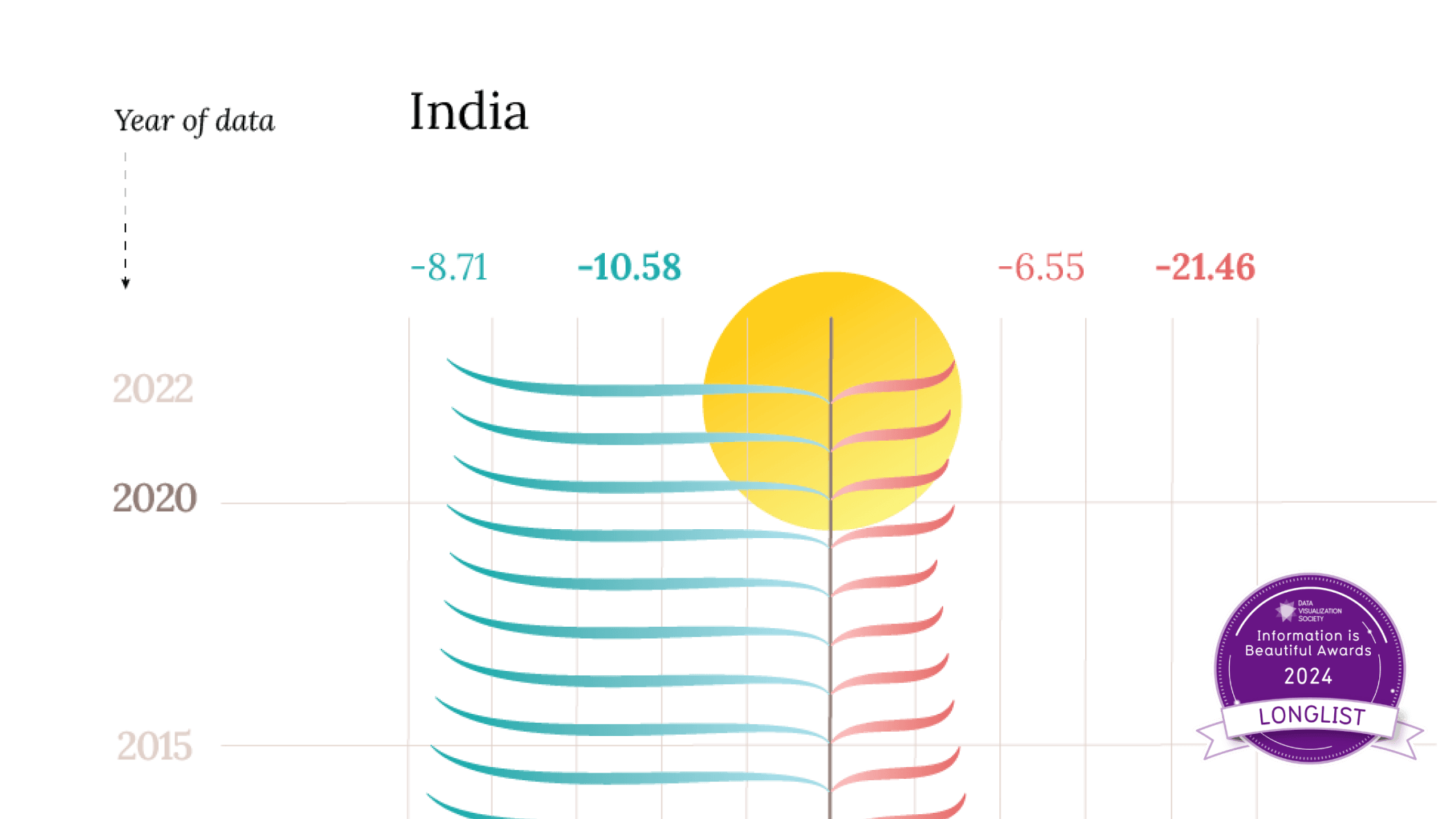
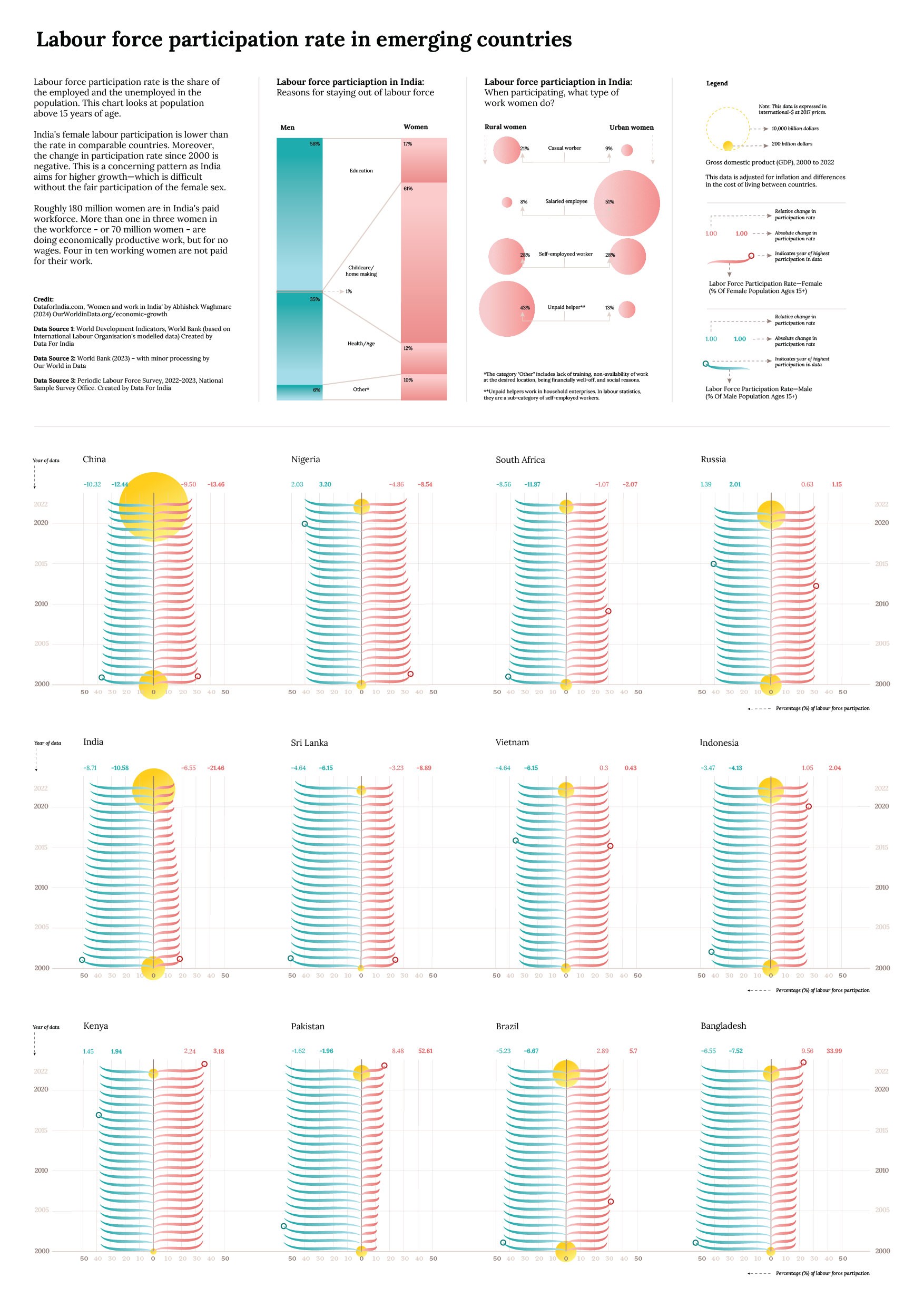
Stirred by India's most recent labour statistics I discovered that while eight in ten men are in the labour force, only four in ten women are.
This visualization highlights the gender gap in workforce participation over multiple years, emphasising the needed progress. It examines the types of work performed by women who enter the workforce and analyzes differences between urban and rural women's participation.
This project was shortlisted for IIB 2025.
What does the chart show?
The chart places India amidst other comparable countries with a focus on labourforce data from the dawn of 21st century. It pairs this key data within the context of change in GDP of each nation for the same time period to anchor the comparison in economic development.
Coupled with this is the absolute and relative change in participation rate; both metrics are used to provide a balanced statistic. Years of highest participation are indicated visually for faster comprehension of participation trends for men and women.
Process
Studying databases to select relevant contextual data-points to support the main dataset
Analysis of data to support the presented insight
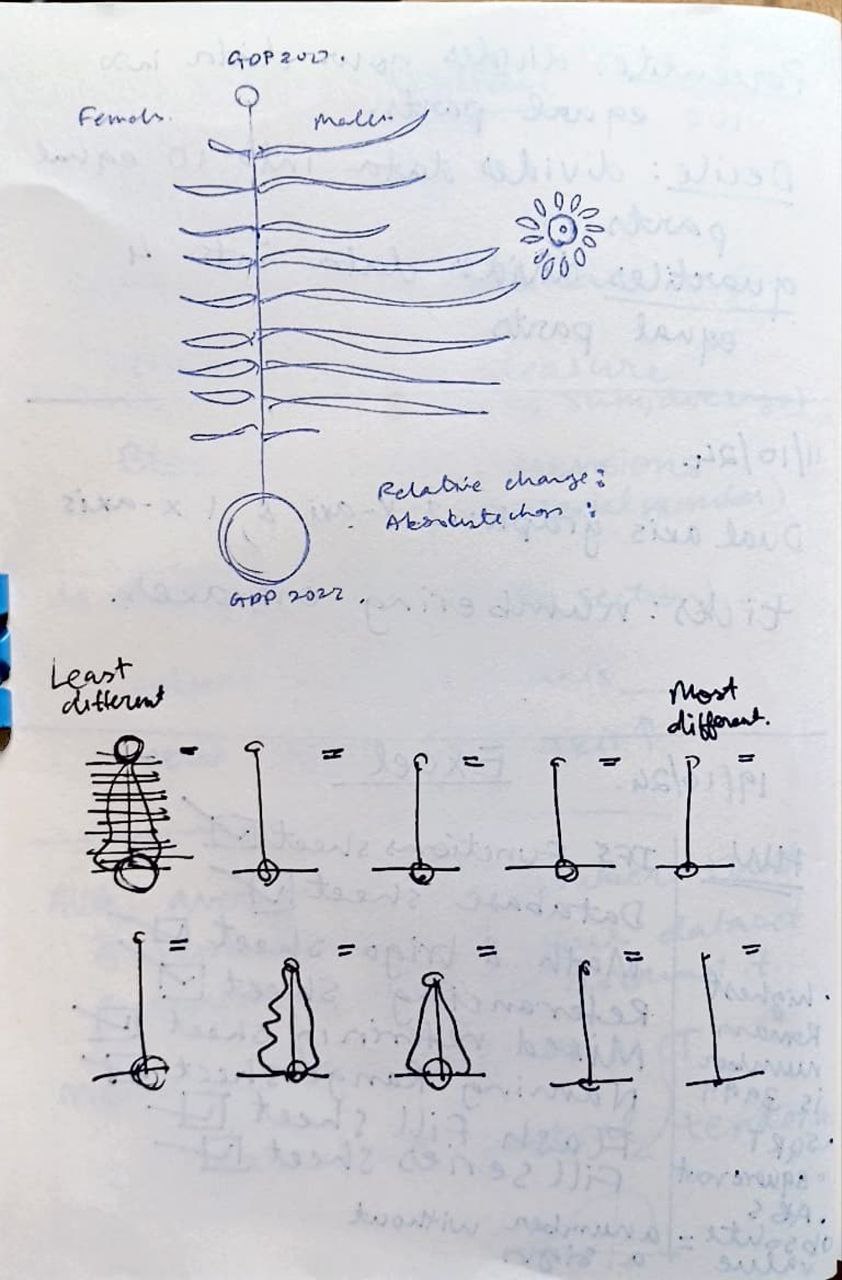
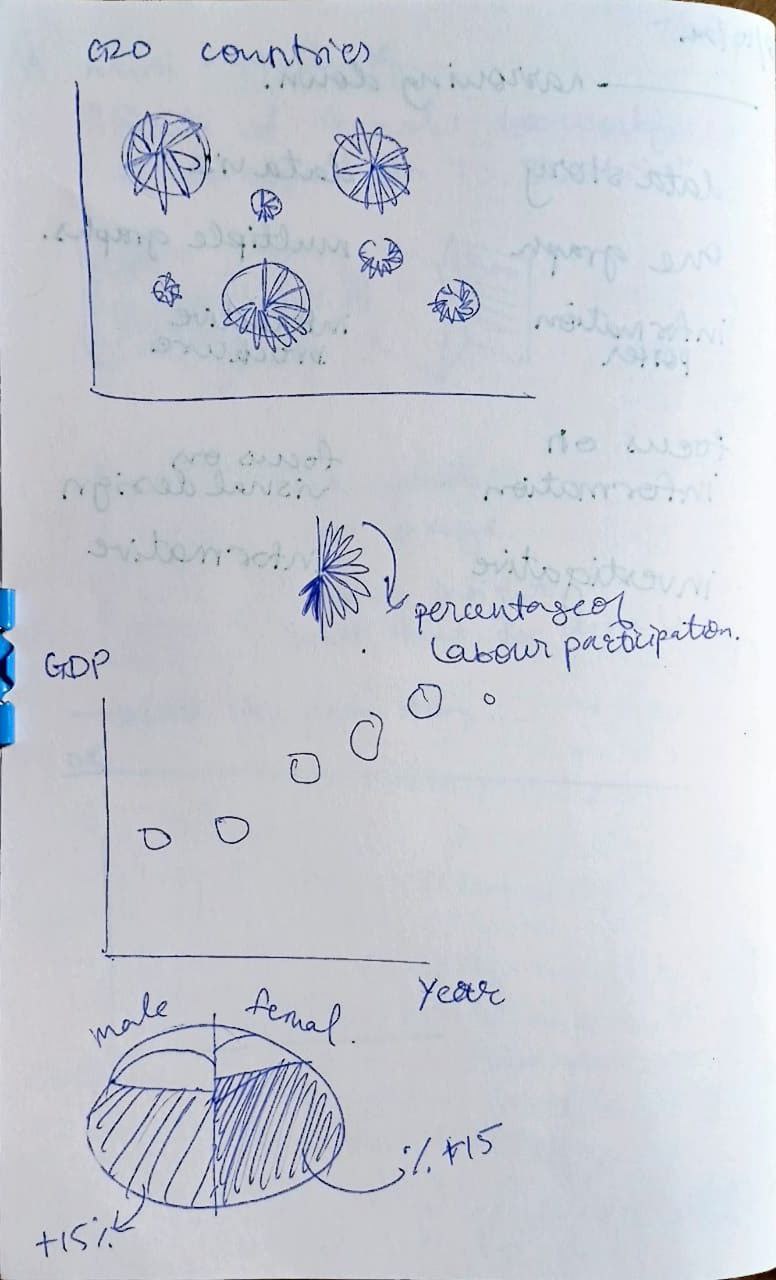
Design and redesign of the data in suitable charts
Encoding the data + creating a legend
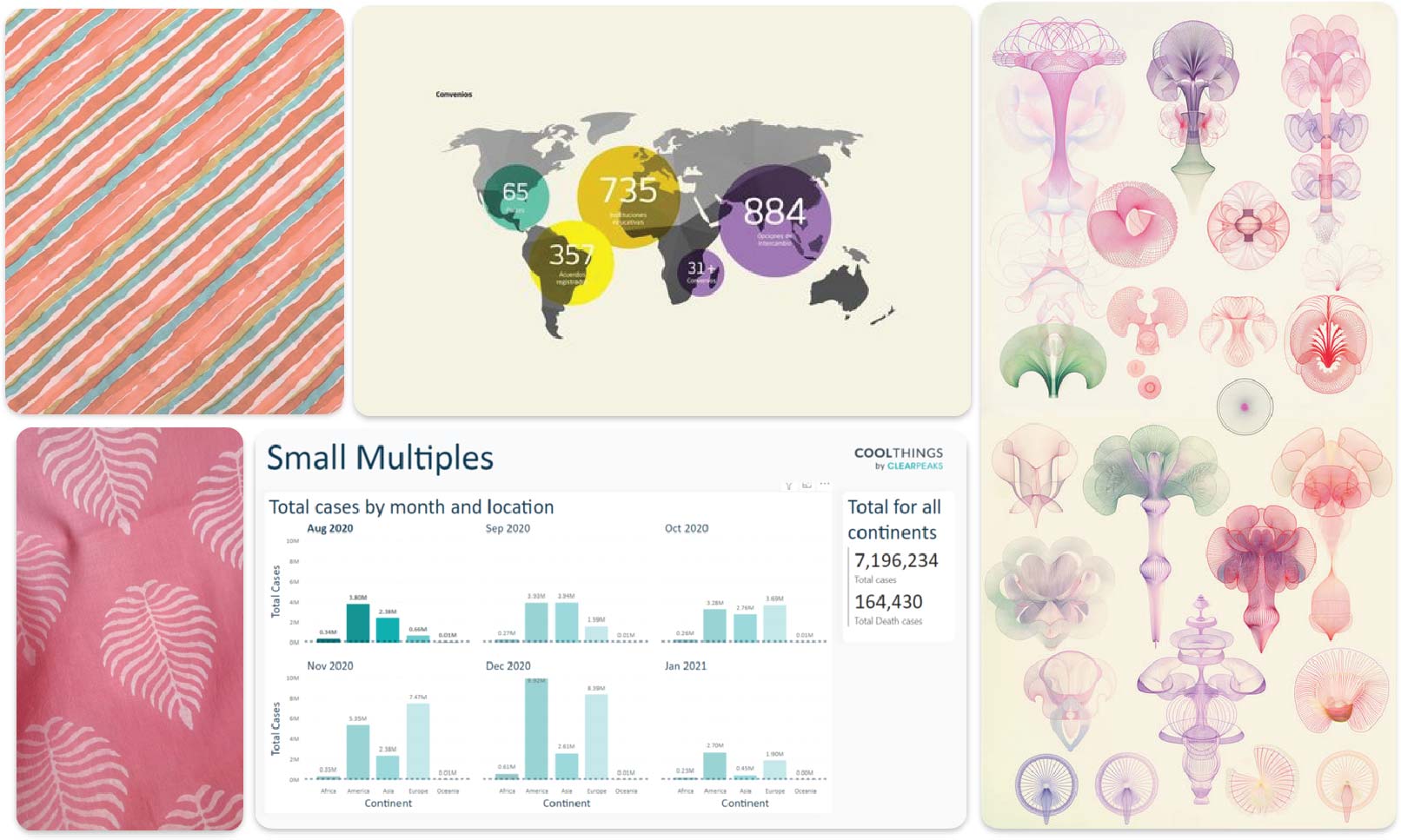
Moodboarding to shape the structure of the poster