
Guide book for strengthening PMJAY mobilization for ASHAs
Designing a task-focused guide backed by BCC for ease of adoption & comprehension
Design Hackathon,
ABCD
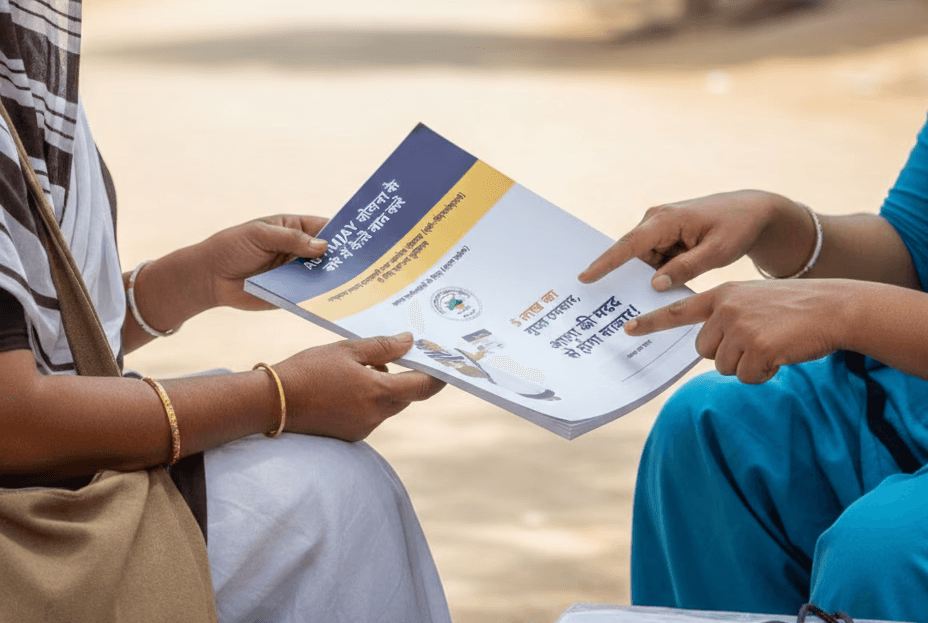
The Context
The Pradhan Mantri Jan Arogya Yojana (PMJAY) struggles with last-mile outreach in Uttar Pradesh, leaving many beneficiaries unaware of their healthcare entitlements. ASHA workers are perfectly positioned to bridge this gap, but they face significant systemic and behavioral hurdles.
They lack deep, actionable knowledge about the scheme's specifics.
They currently operate without dedicated training or visual reference tools.
They receive no financial incentives for PMJAY tasks.
The overall referral system is weak, making it hard for ASHAs to track patients.
The brief of the design challenge was to break down this kind of systemic friction—where critical health information gets lost at the last mile. The brief mandated inclusion of Behaviour Change Communication (BCC) in execution to motivate, not just communicate, the ASHAs to adopt the information dissemination of the policy.
Team members: Ashwin Majali, Sowmya Jayaram
This project was a submission for a behaviour design challenge.
Design Research
Book Design
The Challenge
Create a 12-page PMJAY sub-booklet (covers not included) for ASHA workers in Uttar Pradesh to use as a quick field reference. It was critical to apply behavioral science principles to minimize cognitive load, aid decision-making, and build user confidence. The final product needed to be portable, intuitive, and promote the PMJAY helpline as a primary support tool.
Assessment Criteria
Process
(1) Primary research
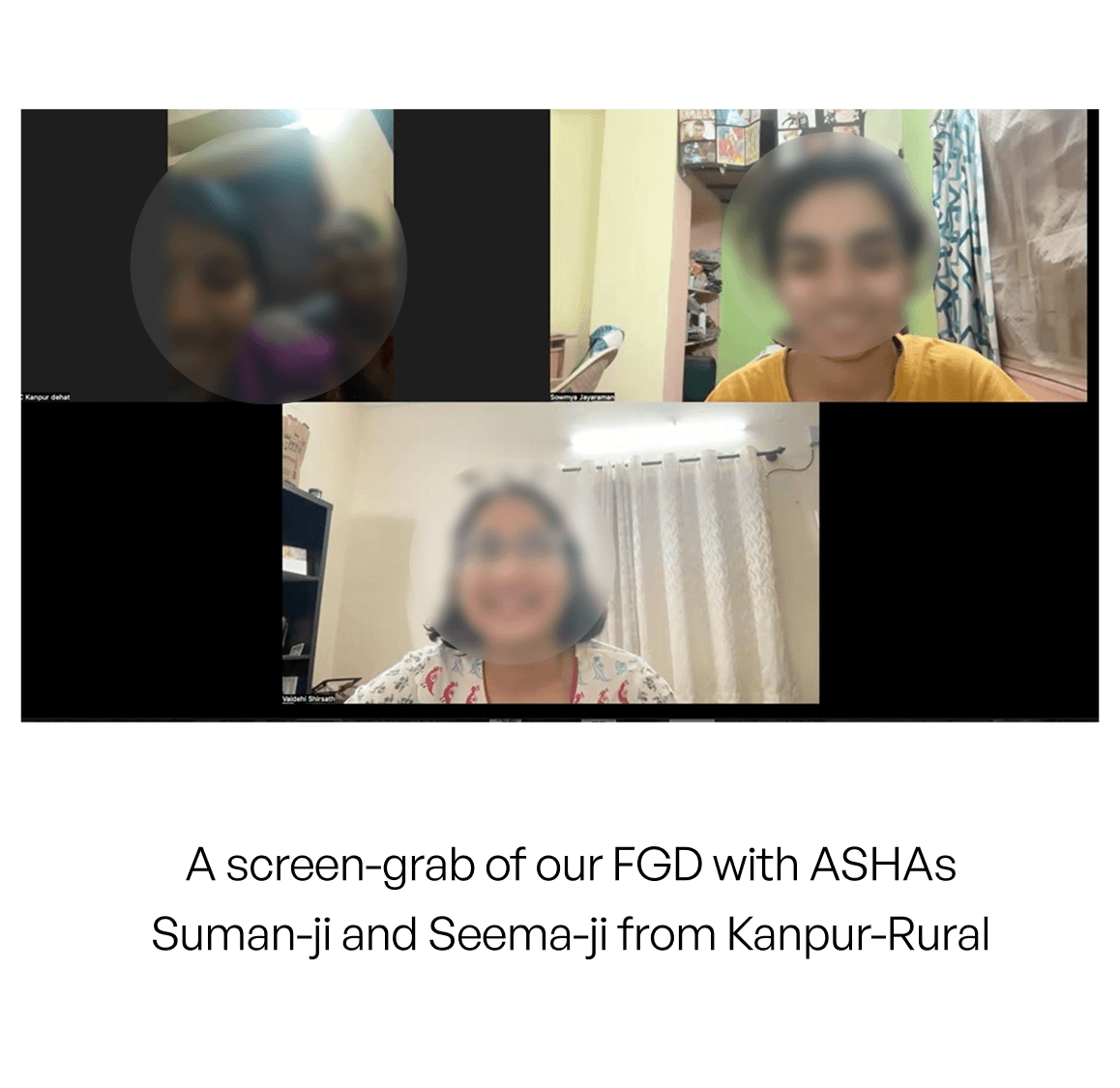
Online FGD with 2 ASHAs from Uttar Pradesh
Trust deficits in communities (fear of hidden costs)
Beneficiary segmentation: "interested" vs "indifferent"
ASHAs work in pairs to compensate for knowledge gaps
(2) Secondary research
Academic studies, government reports, news articles, official portals
Al tools: Perplexity Pro, NotebookLM
Cognitive overload from unstructured eligibility criteria
Incentive misalignment (PM-JAY deprioritized)
Digital literacy gaps
(3) Framework Integration
Applied to synthesize insights and guide solution design
Structured content for perceived benefits and self-efficacy
Peer modeling and chunking for clarity
Tools and cues that are Easy, Attractive, Social, Timely


Key aspects of submission
(1) Behavioral Thinking & Cognitive Load
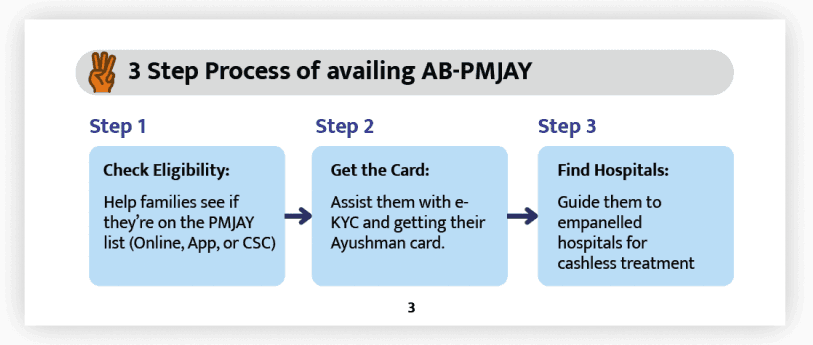
Minimizing Cognitive Load:
We distilled a complex policy into a linear "3-Step Process". This "chunking" method reduced decision fatigue and provided a clear, actionable path.
Behavioral Motivation (Narrative Persuasion):
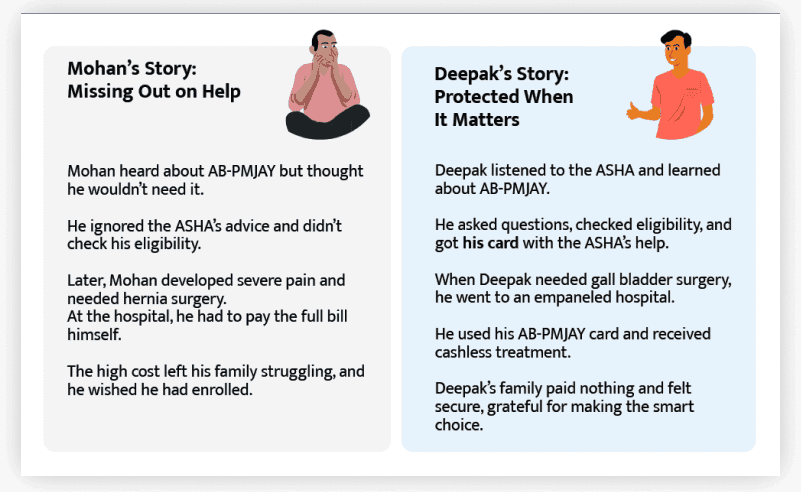
To counter the lack of financial incentives, we used storytelling to trigger loss aversion and demonstrate the tangible impact of an ASHA’s work. By framing health workers as "pillars of support," we appealed to their community identity and intrinsic motivation.
(2) Clarity & Usability
Role Clarity:
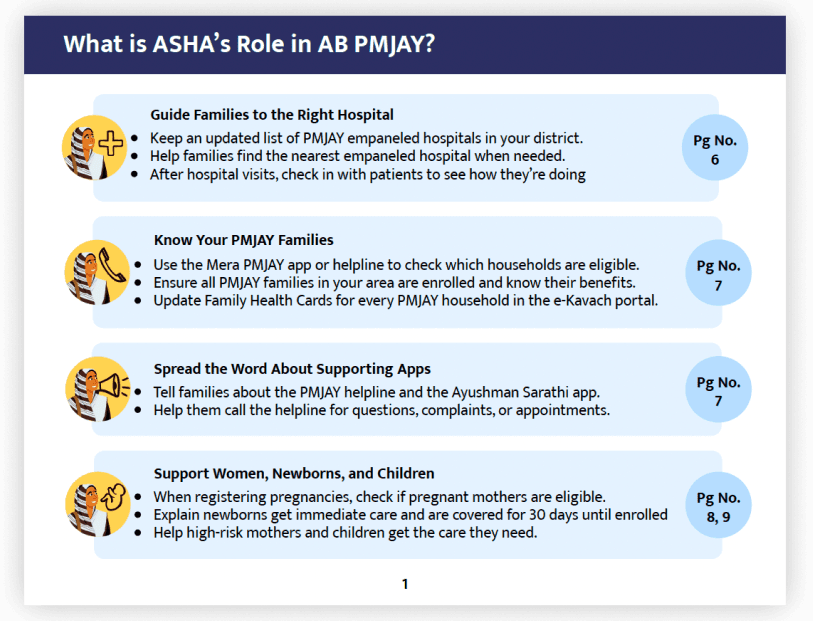
A section to break down ASHA’s responsibilities down into immediate, actionable verbs (Guide, Know, Spread, Support) rather than vague policy goals.
Contextual Relevance:
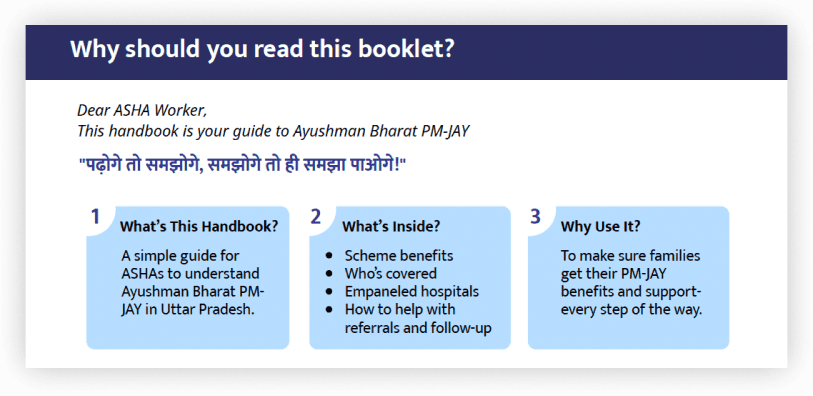
The use of colloquial Hindi phrases immediately grounds the document in the local language of the reader.
(3) Visual Design & Accessibility
Visual Anchoring:
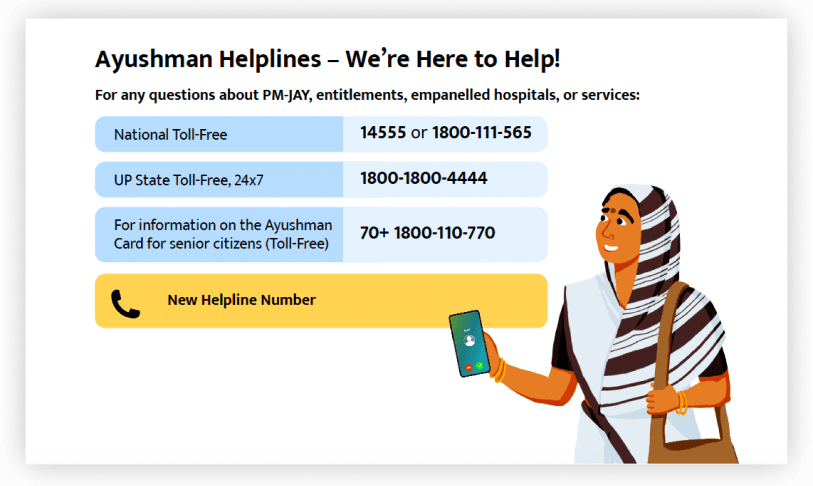
The recurring illustration of the ASHA worker provides a strong, relatable visual anchor throughout the booklet.
Scannable Information Architecture:
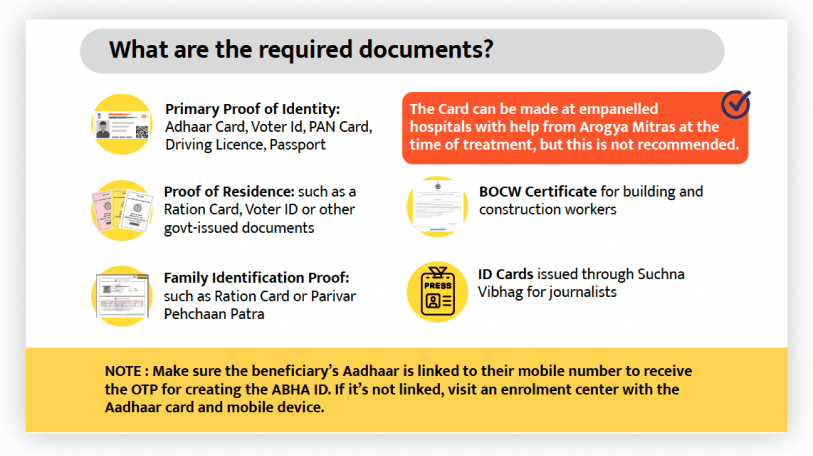
Translated complex eligibility criteria into a scannable checklist. For women's health services, a matrix table denotes differences between public and private hospitals.
Digital Navigation:
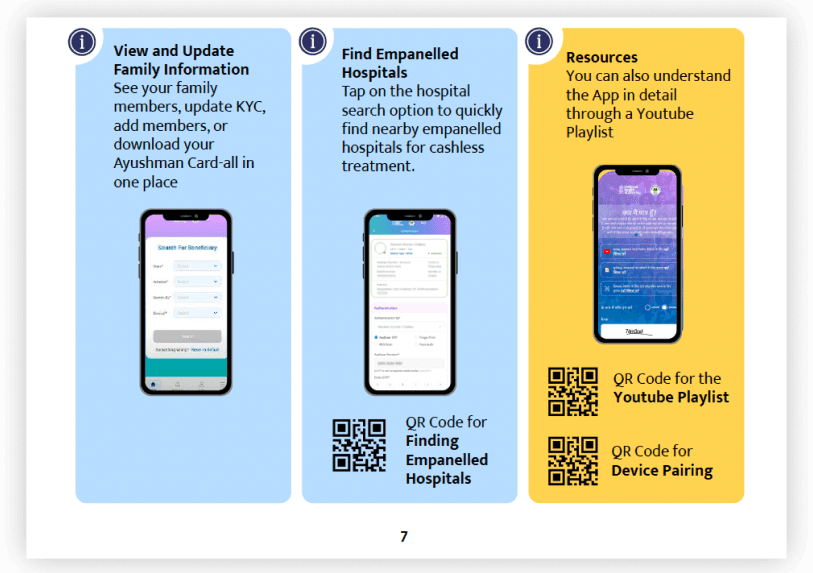
Provided a step-by-step visual walkthrough for the Ayushman App, complete with visual cues to guide the user through the interface.
(4) Practical Integration
Safety Net Integration:
Successfully positioned the helplines prominently on the "Find Hospitals" page and reinforced them strongly on the concluding page as a primary support system.
Quick Reference:
Including QR codes for YouTube tutorials, empanelled hospitals, and device pairing ensures that the physical booklet acts as a bridge to dynamic, up-to-date digital resources without cluttering the printed pages.
Expected Outcome & Value Addition
(A) Behavioral Shifts
The design intends ASHAs to connect with families more frequently using simplified eligibility checks. Confident communication will stem from digestible 5-point summaries and visual aids. Helpline usage will rise due to bolded numbers.
With clear, practical tools, this booklet empowers ASHAs to guide families smoothly.
(B) Field ready and Motivational Design
QR codes for offline hospital lists and app tutorials work without internet, unlike static PDFs. Chunked flowcharts, color-coded tables, and icons replace text-heavy guides, reducing cognitive strain for quick glance and shared reading. Success stories and gratitude notes counter burnout, while loss aversion narratives drive action.